EU AI Act Enforcement Powers Kick In as Transparency Rules Apply
From August 2, 2026, the European Commission’s AI Office and national authorities begin enforcing the AI Act’s remaining core rules—including transparency duties for chatbots and deepfakes and supervisory powers over general-purpose AI models—making Brussels the world’s first comprehensive AI regulator with live penalty teeth.
TLDR
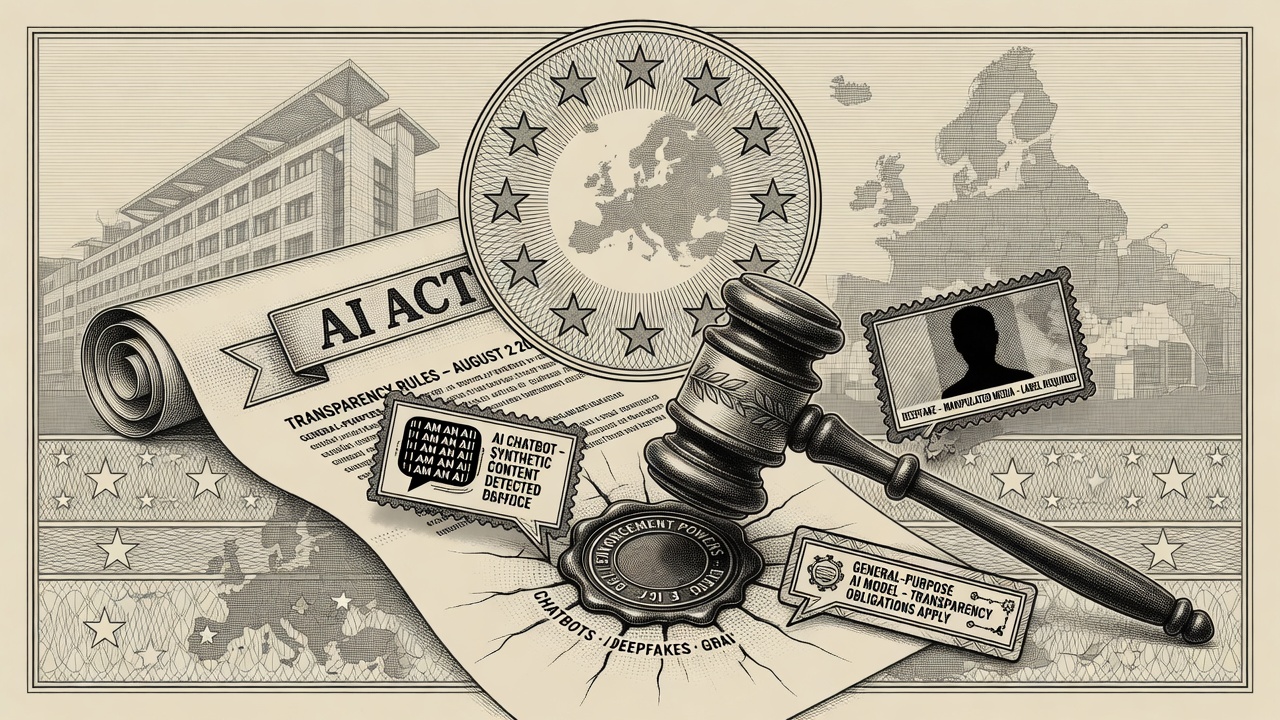
August 2, 2026 is the day the EU Artificial Intelligence Act’s main remaining obligations become enforceable. The European Commission’s AI Office, together with Member State authorities, can supervise and penalize non-compliance. The same day, Article 50-style transparency rules apply: interactive AI systems must disclose they are AI; deepfakes must be labelled; AI-generated or altered content needs machine-readable marks. The Commission had previewed the switch-on in a 31 July 2026 press package.
What becomes live on 2 August
| Surface | What changes (EC / digital-strategy primary) |
|---|---|
| Enforcement start | AI Office + national authorities: implement, supervise, enforce |
| GPAI models | AI Office holds enforcement over general-purpose AI providers (docs, evaluation, corrective measures, fines) |
| Transparency | Chatbots/interactive systems must tell users they are AI; deepfakes labelled; AI content machine-readable marked |
| Sandboxes | Member States must have at least one national AI regulatory sandbox |
| High-risk systems | Bulk high-risk operator obligations apply (with staged exceptions still on the statutory calendar) |
The AI Act entered into force 1 August 2024 and applied in phases. 2 August 2026 is the milestone that turns the Commission from rule-writer into day-to-day market supervisor for the most consequential AI obligations.
Operational detail for labs and deployers
- GPAI Code of Practice and GPAI provider guidelines operationalize transparency, copyright, and systemic-risk duties for frontier-class models.
- A first list of 180+ organisations signed the Code of Practice on transparency of AI-generated content (Commission note in the 31 July package).
- Complaint and whistleblower channels for AI Act breaches and downstream GPAI issues are live on Commission digital-strategy surfaces.
- Fines for non-compliance can reach up to 7% of global annual turnover for the most serious breaches under the Act’s penalty architecture (as widely briefed in contemporaneous coverage).
U.S. and other non-EU labs shipping into the EU single market remain in scope when they place models or systems on the EU market—extraterritorial reach is the design, not a side effect.
Transatlantic contrast (same week)
The EU switch-on lands as Washington finalizes a voluntary cyber-capability testing framework for frontier U.S. models (see August 3 White House coverage). Europe is choosing binding, public statutory duties; the U.S. administration is still building a voluntary, partly classified pre-release review path. Multinationals now run two compliance clocks in parallel.
Why this story matters
Enforceable AI law changes product roadmaps, disclosure UX, watermarking pipelines, and legal budget—not just policy blogs. Expect first inspection waves against high-visibility chatbots and generative media tools, GPAI documentation requests to major U.S. labs, and forum-shopping debates over which authority leads systemic-risk cases. Watch early Commission enforcement actions, national sandbox capacity, and whether open-weight providers treat EU marking rules as global defaults.
Sources
- European Commission digital strategy: Commission starts enforcing AI Act rules and new transparency requirements on 2 August (31 July 2026)
- European Commission: Enforcement of the AI Act
- European Commission: Regulatory framework for AI (AI Act overview)
- Euronews: EU rules on AI models become enforceable (August 2, 2026)